





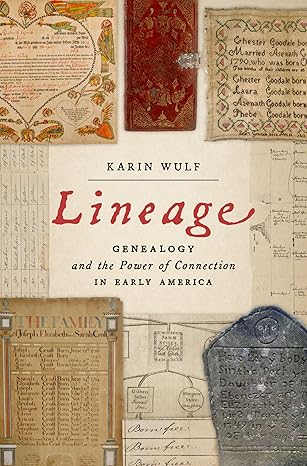
In eighteenth-century America, genealogy was more than a simple record of family ties--it was a powerful force that shaped society. Lineage delves into an era where individuals, families, and institutions meticulously documented their connections. Whether driven by personal passion or mandated by churches, local governments, and courts, these records appeared in diverse forms-from handwritten notes and account books to intricate silk threads and enduring stone carvings.
Family connections wielded significant influence across governmental, legal, religious, cultural, and social spheres. In the American context, these ties also defined the boundaries of slavery and freedom, with a child's status often determined by their mother, despite the prevailing patriarchy. This book reveals the profound importance of genealogy that was chronicled by family records, cultural artifacts, and court documents. These materials, created by both enslaved individuals seeking freedom and founding fathers seeking status, demonstrate the culturally and historically specific nature of genealogical interest.
Even as the American Revolution transformed society, the significance of genealogy endured. The legacy of lineage from the colonial period continued to shape the early United States, underscoring the enduring importance of family connections. Lineage offers a deep understanding of genealogy as a foundational element of American history, illuminating its vital role from the colonial era through the birth of the nation. (Amazon Review)
You must be logged in as a Member to participate in the event. Log-in at https://www.msoginc.org/members.php.
Go to "Event Registration" to register for the book club.
Upcoming Book Club Readings:
November 3, 2026 - American Passage: The History of Ellis Island by Vincent J. Cannato
November 3, 2026 - American Passage: The History of Ellis Island by Vincent J. Cannato
December 1, 2026 - March by Geraldine Brooks
January 5, 2027 - TBA